







Receive for Free - Discover & Explore eNewsletter monthly with advance notice of special offers, packages, and insider savings from 10% - 30% off Best Available Rates at selected hotels. 
history
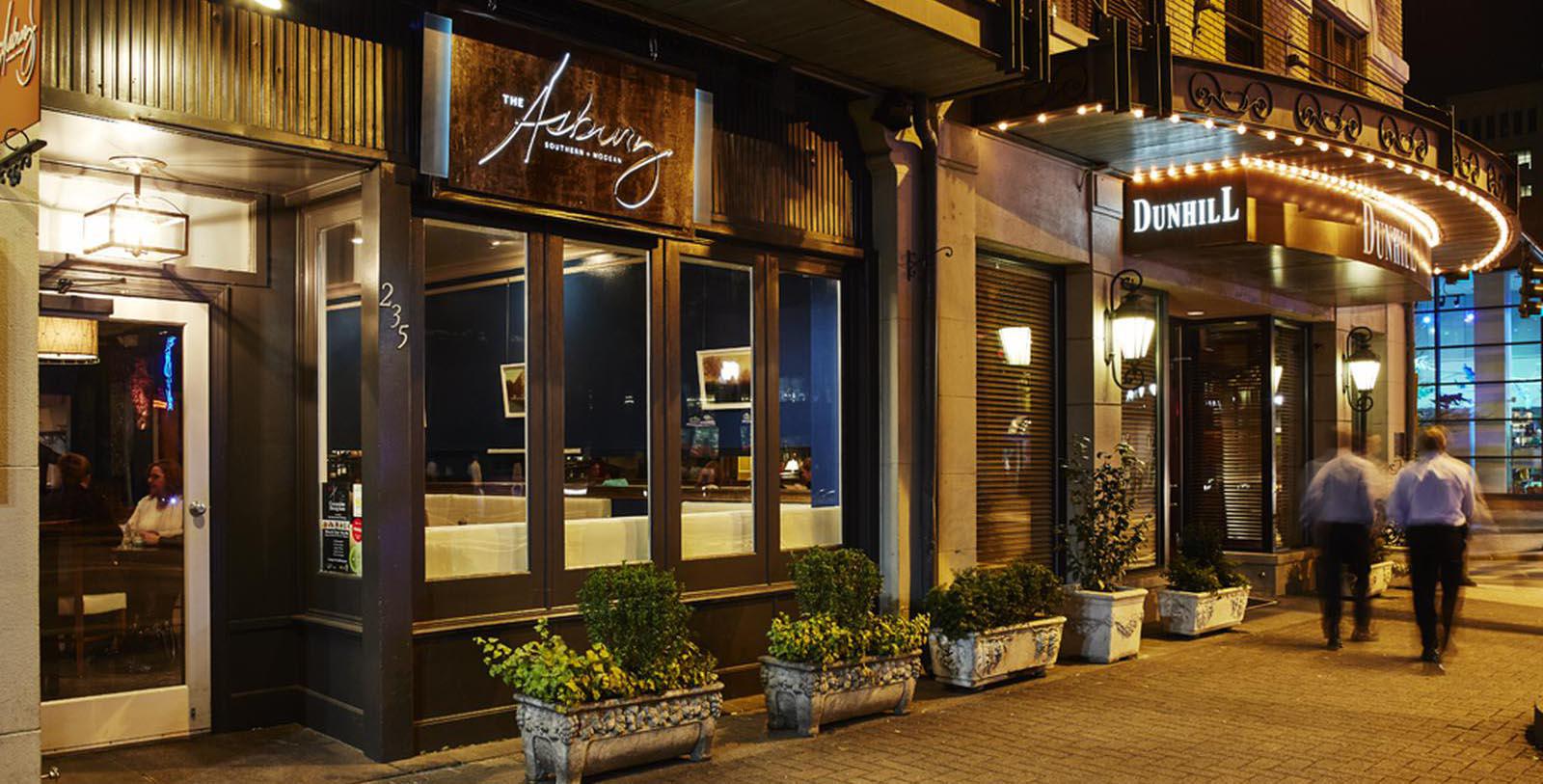
Discover The Dunhill Hotel, which is located conveniently located just steps from the diverse offerings of downtown Charlotte.
The Dunhill Hotel was constructed amid the great economic calamity that affected most of the world during the 1930s.
The land where The Dunhill Hotel, originally known as the Mayfair Manor, sat was originally purchased for $250,000 in 1926 by Drs. J.P. Matheson and C.N. Peeler, founders of the Charlotte Eye, Ear, Nose, and Throat Hospital. Its location was highly envied, just as it is today, a mere two blocks north of the city square, near the business district and the diversity of Charlotte’s downtown. At the time, Ivey’s and Belk’s department stores beckoned nearby, as did a host of cafés, bakeries, quaint shops offering curios, and several churches.
In 1928, Matheson hired architect Louis Asbury Sr. to begin work on the hotel. Decades earlier, Asbury was entranced by the great Italian craftsmen who created cathedrals famous for its soaring, elegant rooflines. As Asbury began his work on the 10-story hotel, with its refined architecture and neoclassical embellishments, he envisioned that it would stand boldly as a distinctive shape against the Charlotte, North Carolina skyline. An amalgam of American, British, and Italian influences, Mayfair Manor would spark the interest of those with an eye for period detail, recognizing the hotel’s European and early American origins as Asbury intended. As the concept for the hotel developed, it soon become clear Matheson’s faith in Asbury was well justified.
Mayfair Manor opened to the public on November 15, 1929. On that mid-November day, the hotel opened with a delightfully split personality, straddling the line between accommodating guests who had traveled from near and far, and those who would call Mayfair Manor home - indeed, half of its original 100 rooms were designated as permanent residences. Despite the issues suddenly percolating through the national economy, Mayfair Manor was celebrated in local papers as a triumph of architecture and ingenuity, and was heralded as a prize of its time, sitting proudly among some fifteen other Charlotte hotels of varying levels of success. It was said that the Mayfair Manor “quietly thrived.” Though not the largest hotel of its day, its design and highly coveted location helped it persevere.
Mayfair Manor’s original owner, Dr. Matheson, passed away in August 1937, and the property was acquired by the Mayfair Realty Corporation. In 1959, the property was sold to Dwight L. Phillips and renovations and improvements were ordered to the tune of $225,000 in upgraded aesthetics and infrastructure enhancements. The hotel was sold again in December 1960 and its name changed to James Lee Motor Inn. Twenty years later, the property would change hands again, beginning a series of transactions concerning the property that weren’t notable for financial gain or aesthetic improvements. In December 1980, owner A.B. Wilkins declared his partnership with Charles Kinnard to convert the property to luxury condominiums. By 1981, however, the two partners had reached a grievance and would ultimately place the property back on the market for sale.
The Dunhill Hotel Associates purchased the hotel in August 1987 and spent nearly $6 million on renovations and acquiring the adjacent storefronts. It reopened in the fall of 1988 as The Dunhill Hotel along with its restaurant, Thistle. Since 1991, Dunhill Hotel Group and Summit Hospitality Group have owned and managed the property, making steady progress toward restoring and reimagining the hotel into the elegant, understated refinement it offers today. hough The Dunhill Hotel has had many names, owners, and management concepts over its considerable history, it has always managed to retain a sense of Old World style and service, a feeling of comfort and warmth, and a place where no request is considered too great or too small. The Dunhill Hotel of Charlotte, North Carolina’s Uptown, est. 1929.
-
About the Architecture +
Architect: Louis Asbury Sr.