





Receive for Free - Discover & Explore eNewsletter monthly with advance notice of special offers, packages, and insider savings from 10% - 30% off Best Available Rates at selected hotels. 
history
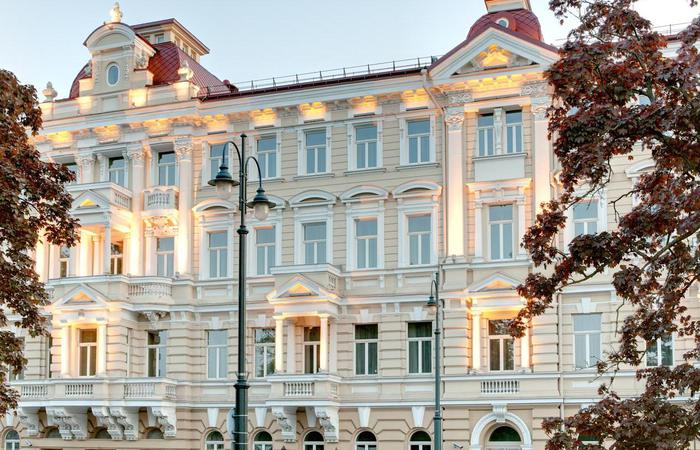
Discover the history of the Queens Hotel Cheltenham – MGallery by Sofitel, which has been a renowned holiday destination since 1838.

Queens Hotel Cheltenham - MGallery by Sofitel, a member of Historic Hotels Worldwide since 2018, dates back to 1838.
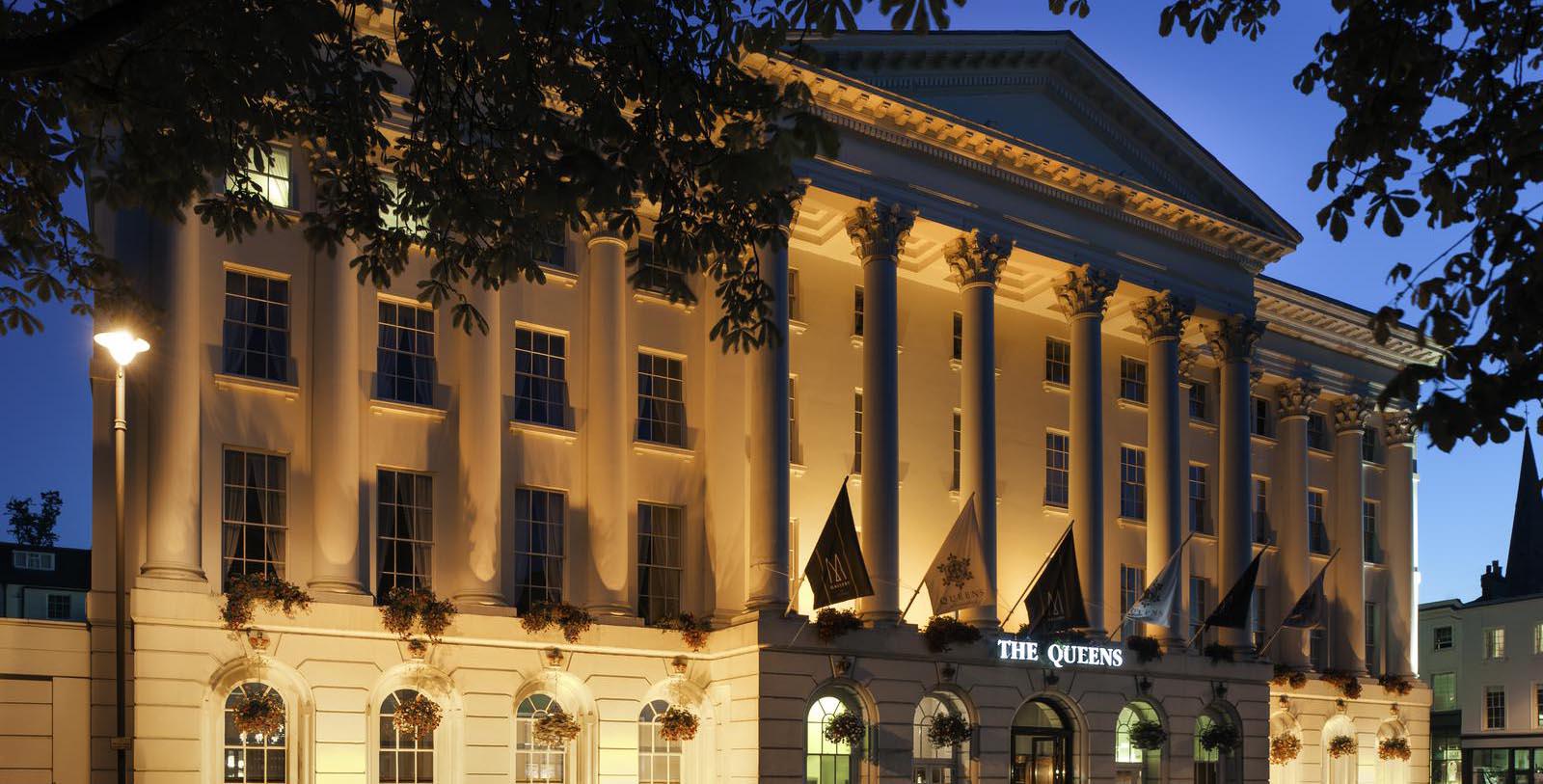
VIEW TIMELINEA member of Historic Hotels Worldwide since 2018, the Queens Hotel Cheltenham - MGallery by Sofitel resides in the quaint English town of Cheltenham. For centuries, Cheltenham was considered a remote hinterland, until a few locals discovered numerous mineral springs near the town. By the end of the 18th century, many of the townspeople had begun developing spas that administered the supposed medicinal properties of the spring water. When King George III arrived in Cheltenham to experience the mineral springs for himself, interest in the spas throughout the area exploded. Scores of enterprising people came to Cheltenham to capitalize on the popularity, building dozens of new spas in the process. In 1818, two entrepreneurs, Thomas Henney and Samuel Harward, built a spa on a section of marshy ground near the River Chelt. Once completed, the two men called the building the Sherborne Spa. Many people journeyed to the spa over the next two decades to revel in its soothing spring water. In 1837, however, its spring ran dry. The spa’s owners quickly dismantled the facility, rebuilding it elsewhere in Cheltenham. Other businesspeople soon occupied the location, erecting a hotel where the spa once stood. Robert Jearrad and his brother, Charles, oversaw the hotel’s construction, using the Temple of Jupiter as the inspiration for their design. As such, they subsequently adorned the structure with an imposing white façade and Corinthian columns. Construction on the hotel finally concluded in 1838, with its owners christening it the "Queens Hotel" in honor of Queen Victoria. Since then, the Queens Hotel has hosted countless visitors traveling on holiday into the Cotswolds. Over the years, many prominent individuals have stayed at the building, including General Sir Charles James Napier, Sir Arthur Conan Doyle, and Edward Elgar. For its long, meritorious service, preservationists listed the Queens Hotel as a Grade II English Heritage building in 1955. Today, Sofitel operates this wonderful establishment as the “Queens Hotel Cheltenham - MGallery by Sofitel.” The hotel recently underwent a thorough renovation, which revitalized much of its historic character. It still retains most of its original features, including its grand, 19th-century wallpaper and beautiful Georgian staircase. Guests are certain to fall in love with the marvelous Queens Hotel Cheltenham.
-
About the Location +
Located on the edge of the verdant English Cotswold region, Cheltenham is an ancient village with a history harkening back centuries. The earliest references to Cheltenham first appear in the 9th century, when a group of Anglo-Saxons established a quaint farming village called “Celtan hom” in the vicinity. Over time, the name would gradually morph into “Chintenham” and then just “Cheltenham.” Little else existed, save for a rudimentary church that was eventually pillaged by the Vikings. Nevertheless, the clergy remained a fixture in the local community, for it owned nearly all the land. As such, the residents often worked at the their behest, raising livestock and growing crops. The people specifically made a living peddling sheep, as well as the wool they sheered from the animals. A small, yet bustling market soon formed in the center of town, giving its inhabitants a reliable place to trade. Still, the settlement endured as a small country hamlet for generations, numbering just a couple hundred people well into the reign of the Hanover monarchs. Its true transformation into its current appearance transpired, though, in 1716, after Captain Henry Skillicorne discovered a series of mineral springs in a field south of town. A retired mariner, Captain Skillicorne’s extensive experience traveling around the world had enabled him to recognize the spring’s potential as a tourist attraction. He, thus, spent the next two decades deepening it to form a well. Captain Skillicorne then proceeded to install a pump within an elaborate assembly hall that featured such stunning facilities like a grand ballroom and billiard hall. Furthermore, he planted a gorgeous tree-lined promenade that linked his brilliant new spa with the rest of Cheltenham.
When Captain Skillicorne finally debuted his new holiday destination in 1738, it immediately became one of the most popular vacation retreats in all of England. People regularly traveled days at a time to visit the spring, with some of its most notable guests among the British aristocracy. King George III himself was even a visitor, who spent five weeks in Cheltenham during the late 1780s. The king enjoyed his stay so much that he bestowed an official royal charter onto the town! Cheltenham’s population began to swell and many new facilities made their debut, including a Circulating Library and an Assembly Rooms. Business remained constant well into the following century, even as war and economic depression gipped at the rest of Great Britain amid the Napoleonic Wars. In fact, the ongoing conflict had closed off many of the resort communities in mainland Europe, causing the British nobility to seek accommodations in local spa towns like Cheltenham. The locale subsequently experienced a prolonged construction boom the likes of which it had yet to see, despite a few periodic slumps in the 1820s and 1830s. Buildings in the heart of town began to feature grander building materials, like stucco and brick, while a series of gorgeous terraced gardens proliferated along the glamourous High Street. Some of the new residencies in Cheltenham were resplendent manors, some of which resided along a picturesque stretch of road called the “Promenade.” Most of those great homes were occupied by colonial civil servants and retired military officers, who wished to spend the rest of their lives living within Cheltenham’s charming atmosphere. Additional spa facilities also opened on the Promenade, as well, in order to entertain the influx of new visitors, like the Montpellier Spa, the Imperial Spa, and of course, the Shelbourne Spa.
At the height of the Victorian Age, Cheltenham became somewhat of a university town after a variety of education institutions opened downtown. Among the prolific educational facilities that emerged at the time were Cheltenham College, the Cheltenham Ladies College, and The Church of England Training College for Masters. Manufacturing also integrated itself into the local economy, which featured such businesses like woodcarving and the production of metal artwork. But the spa industry remained the primary source of income for decades, until national interest in the “spa town” went into decline at the start of the 20th century. In Cheltenham, most of the spas shuttered their operations and many people moved out of town. Prosperity only gradually returned when several factories began producing foodstuffs, pharmaceuticals, and aircraft parts en masse. By the end of the Second World War, Cheltenham’s economy had greatly revived itself. The community has continued to thrive, thanks in large part to the renewed interest in its heritage as a resort community. In recent years, Cheltenham has undergone a cultural revival, in which its historic cultural facilities, art festivals, and thoroughbred racecourse (founded in 1911) have fascinated scores of contemporary travelers. Even some of its fantastic neighborhoods—such as the historic Montpellier District and its Promenade—have served as cultural attractions themselves. Any cultural heritage traveler will, thus, find Cheltenham to be among the best places to stay in Europe for a truly memorable vacation.
-
About the Architecture +
Robert Jearrad and his brother, Charles, oversaw the hotel’s construction, who essentially used Classic Revival-style architecture as the source of their inspiration. Also known as “Neoclassical,” Classic Revival architecture itself is among the most common architectural forms seen throughout Europe. This wonderful architectural style first became popular in Europe in Paris, specifically among architectural students who studied at the French Academy in Rome in the late 18th century. Upon their return from the Italian Peninsula, the French architects began emulating aspects of earlier Baroque design aesthetics into their designs, before finally settling on Greco-Roman examples. Over time, the embrace of Greco-Roman architectural themes spread across the continent, reaching destinations like Germany, Spain, and Great Britain. As with the equally popular Revivalist styles of the same period, Classical Revival architect found an audience for its more formal nature. It specifically relied on stylistic design elements that incorporated such structural components, like the symmetrical placement of doors and windows, as well as a front porch crowned with a classical pediment. Architects would also install a rounded front portico that possessed a balustraded flat roof. Pilasters and other sculptured ornamentations proliferated throughout the façade of the building, as well. Perhaps the most striking feature of buildings designed with Classical Revival-style architecture were massive columns that displayed some combination of Corinthian, Doric, or Ionic capitals. With its Greco-Roman temple-like form, Classical Revival-style architecture was considered most appropriate for municipal buildings like courthouses, libraries, and schools. But the form found its way into more commercial uses over time, such as banks, department stores, and of course, hotels. Yet, the form found its way into more commercial uses over time, such as banks, department stores, and of course, hotels. Examples of the form can be found throughout many of the West’s major cities, including London, Paris, and New York City. Architects still rely on Classic Revival architecture when designing new buildings or renovating historic ones, making it among the most ubiquitous architectural styles in the world.
-
Famous Historic Guests +
Sir Charles James Napier, Napoleonic War veteran and Commander-in-Chief of India of the British Indian Army.
Sir Arthur Conan Doyle, physician and author best remembered for creating the character Sherlock Holmes.
Edward Elgar, composer known or such works like Enigma Variations and the Pomp and Circumstance Marches.